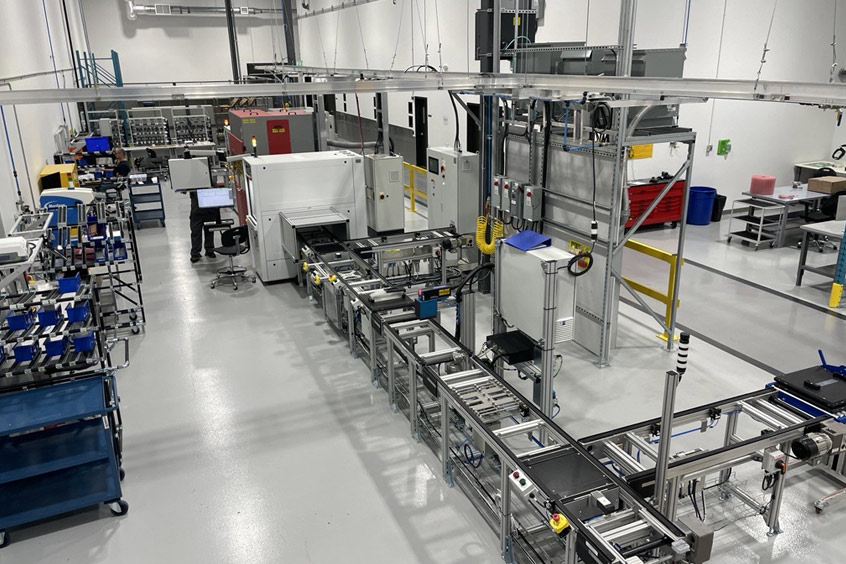
What Are High-Altitude Stations (Haps) Explained
1. HAPS Occupy a Sweet Spot Between Earth and Space
Don't make the mistake of comparing ground towers and orbiting satellites. Platform stations at high altitude operate in the stratosphere. They're typically between 18-22 kilometres above sea level – a layer of atmosphere at a level that is so steady and secure that a well-designed aircraft can hold its place with amazing accuracy. The altitude of this station is high enough that it can serve huge geographic footprints from a single machine, yet close enough to Earth that signal latency stays in the low range and that the hardware doesn't have to withstand the relentless radiation environment that orbits space. This is a truly underexplored region of sky and the aerospace industry is only now starting to explore it in a serious manner.
2. The Stratosphere is Calmer Than You'd Expect
One of the most baffling facts about stratospheric flights is how stable it is when compared to the turbulent atmosphere below. It is true that winds at altitudes above the stratospheric zone are quite gentle and constant and crucially important for station-keeping — the capacity of a HAPS vehicle to maintain the same position above an area of target. For earth observation, telecommunications or other missions, even a few kilometres off position can affect coverage quality. Platforms that are designed to ensure true station keeping, like Sceye Inc.'s platform Sceye Inc, treat this as a basic design requirement rather than as an add-on.
3. HAPS Stands for High-Altitude Platform Station
The term in itself is worth delving into. A high-altitude platforms station is classified under ITU (International Telecommunications Union) frameworks as being a station situated on an object that is located at an altitude that is between 20 and 50 km with a fixed, but not exact and fixed location with respect to Earth. The "station" feature is deliberate as they're not research balloons floating across continents. They're observation and telecommunications infrastructures that are located on stations conducting continuous missions. Think of them less in the same way as aircraft, more like low-altitude, reusable satellites. They have the capability of returning, being serviced as well as redeployed.
4. There are many different vehicle types Under the HAPS Umbrella
It's not the case that all HAPS vehicles are alike. The category covers solar-powered fixedwing aircrafts, airships lighter than air, and tethered balloon systems. There are tradeoffs between payload capacity, endurance, and price. Airships as an example have the capacity to carry heavier loads for longer durations because buoyancy does most of the lifting work and frees up solar energy for station-keeping, propulsion and other onboard components. Sceye's plan employs a lighter model specifically designed for airships to maximize payload capability and mission endurance as well as a conscious architectural option that differentiates it from fixed-wing competitors chasing altitude records with little or no load.
5. Power Is the Central Engineering Challenge
Being in the stratosphere for weeks or months with no fueling needs means solving an energy equation with minimal margin of error. Solar cells recoup energy during daylight hours, but the platform must survive the dark night with stored power. This is when battery energy density becomes essential. Advances in lithium-sulfur battery chemistry and energy density close to 425 Wh/kg are making stratospheric endurance missions increasingly viable. With a boost in solar cell efficiency, the ultimate goal is a closed, dependable power loop by generating and storing enough energy during each day so that it can continue to operate at full capacity for the duration of.
6. The Coverage Footprint is awe-inspiring Compared to Ground Infrastructure
A single high-altitude station at 20 km high can create a terrain of several hundred kilometres. A typical mobile tower covers only a few kilometers at most. This is why this asymmetry results in HAPS an ideal choice for connecting remote or underserved regions where building terrestrial infrastructure is economically difficult to afford. A single stratospheric vehicle could complete what could otherwise require hundreds or thousands of ground-based assets — making HAPS one of the most convincing solutions proposed to address the ongoing connectivity gap across the globe.
7. HAPS can carry multiple payload Types Simultaneously
As opposed to satellites, which tend to be locked into a set mission profile after their launch, stratospheric platforms have multiple payloads that can be altered between deployments. A single vehicle could be equipped with an antenna for broadband transmission, along with sensors for greenhouse gas monitoring wildfire detection, monitoring of oil pollution. This flexibility for multiple missions is one of the most economically convincing arguments for HAPS investment. The same infrastructure is able to support connectivity and climate monitoring simultaneously rather than requiring separate dedicated assets for each mission.
8. The technology can be used to enable Direct-to Cell and 5G Backhaul Applications
From a business perspective The thing that can make HAPS particularly interesting is its compatibility with the existing ecosystems of devices. Direct-to cells allow phones of any type to connect without specialized hardware, while it functions as"HIBS" (High-Altitude IMT Base Station) — which is in essence a cell tower that floats in the sky. It can also serve as 5G backhaul, connecting underground infrastructure to the larger networks. Beamforming technology permits the platform to direct signals precisely to the places where there is a need rather than broadcasting all over the place, improving spectral efficiency considerably.
9. The Stratosphere Is Now Attracting Serious Investors
What was once a niche research field a decade ago has drawn significant investment from major telecoms companies. SoftBank's agreement with Sceye to develop a nationwide HAPS networks in Japan and aiming to provide pre-commercial services in 2026, is one of the most significant commercial investments in stratospheric connectivity to date. It signifies a shift away from HAPS being viewed as an experiment to being viewed as a deployable infrastructure that generates revenue — which is an important factor for the wider market.
10. Sceye represents a brand new model for Non-Terrestrial Infrastructure
Incorporated by Mikkel Vestergaard in New Mexico, Sceye has established itself as a reputable company for the long term in what's truly an aerospace frontier. Sceye's primary focus is on combining the endurance of its platforms, their payload capacity, and multi-mission capabilities is indicative of the firm belief that these platforms will eventually become a durable layer of global infrastructure — not a novelty or a gap-filler, but a genuine third tier in between the terrestrial network and orbital satellites. Whether for connection, climate monitoring or disaster response, high elevation platforms are beginning to look less like a promising concept as they become a fundamental part of how humanity monitors and connects the planet. Check out the top rated space- high altitude balloon stratospheric balloon haps for more examples including softbank sceye partnership haps, SoftBank investments, sceye haps project status, what is haps, softbank sceye partnership, Cell tower in the sky, Stratospheric missions, softbank sceye haps japan 2026, what are haps, sceye haps airship specifications payload endurance and more.
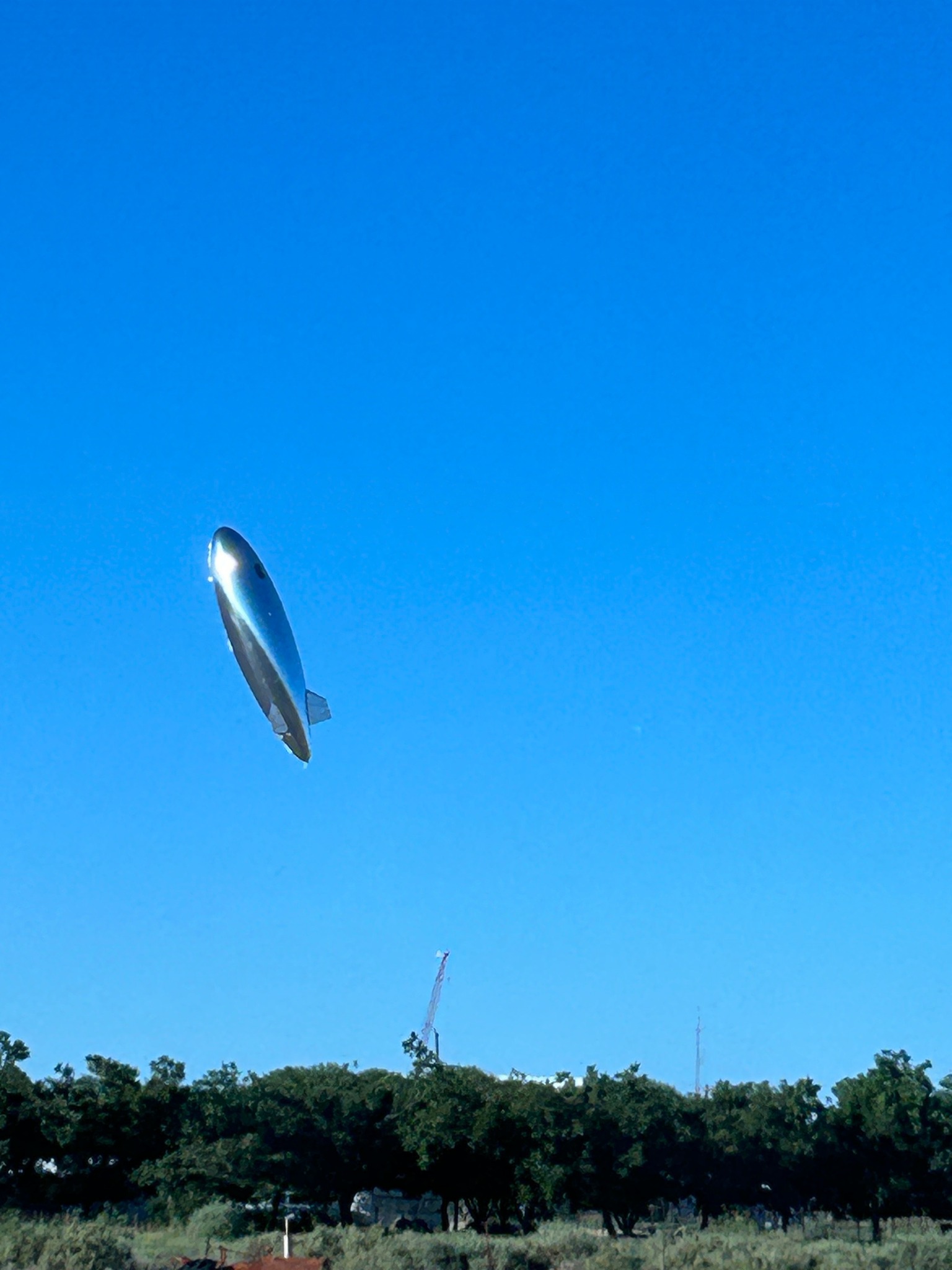
Alerts For Disasters And Wildfires From The Stratosphere
1. The Detection Window is the most valuable thing You Can Get Extending
Every major catastrophe has a time — often measured in seconds, sometimes it's hours -when early awareness would have changed the outcome. The wildfire that covers half a hectare of land is a containment problem. The same fire that is discovered that covers 50 hectares is a major crisis. An industrial gas leak detected within the first few minutes may be managed before it becomes a major public health emergency. The same gas release that was discovered within three hours, triggered by in a ground survey or by a satellite flying overhead on its scheduled visit, has already turned into a problem for which there is there being no effective solution. The ability to extend the detection window is arguably the single most valuable feature that improved monitoring infrastructures can do, and the continuous stratospheric monitoring is among the few strategies that change the window significantly rather than slightly.
2. Wildfires Are Getting Harder for the Forest Service to Monitor, despite existing infrastructure
The intensity and frequency of wildfire events over the last decade has outpaced the monitoring infrastructure created to monitor the fires. Networks of detection based on ground — sensors, watchtowers or ranger patrols — cover too little area too slow to capture fast-moving fires early in their development. Aircrafts are efficient but costly, weather dependent, and reactive rather than anticipatory. Satellites traverse a location on a schedule measured in hours. This means a fire that ignites in the air, spreads, and is crowned between passes generates no early warning. The combination of bigger fires along with increased spread rates triggered on by conditions of drought, and complex terrain creates a gap that traditional approaches cannot close structurally.
3. Stratospheric Altitude Provides Persistent Wide-Area Visibility
A platform operating in the 20-kilometre range above the surface can maintain continuous visibility over a terrain footprint that extends several hundred kilometers covering fire-prone regions, coastlines forests, forest margins, and urban edges simultaneously and without interruption. As opposed to aircrafts, it does not require a return trip to replenish fuel. It's not like satellites. disappear in the horizon after a repeat cycle. For wildfire detection in particular, this type of wide-area monitoring means that the platform is observing when ignition occurs, watching as the initial spread takes place, and looking out for changes in fire behavior in a continuous stream of data rather than a series of disconnected snapshots that emergency managers must cross-check between.
4. Thermal and Multispectral Sensors May Detect Fires Even before smoke is visible.
Some of the most effective technology for detection of wildfires does not wait until visible smoke. Infrared sensors that detect thermal heat can identify anomalies that suggest ignition before a fire has even produced any visible signature — identifying hotspots in dry vegetation or smoldering fires beneath the canopy of forest, and the initial signs of heat that fires are beginning to grow. Multispectral imaging adds further capability through the detection of changes in vegetation state — moisture stress dried, browning and dryingindications of increased fire danger in certain areas prior to any ignition incident taking place. A stratospheric-based platform with the combination of these sensors will provide an early warning of active ignition and a prescriptive insight on where the next ignition is likely to occur, which is a qualitatively unique kind of awareness that conventional monitoring provides.
5. Sceye's Multi-Payload Methodology Combines Detection with Communications
One of the complexities of major disasters the infrastructure people depend on for communication like mobile towers power lines, internet connectivity and so on — is often one of the first items to be destroyed or flooded. The stratospheric platform, which includes disaster detection sensors as well as a telecommunications payloads will address this problem from a single vehicle. Sceye's methodology for mission design treats connectivity and observation as complementary functions rather than competing ones. This means that the system that detects a rapidly growing wildfire can also provide emergency messages to responders on the ground whose networks have gone dark. The cell tower in the sky isn't just a witness to the disaster — it also keeps people connected to it.
6. It's a lot more than Wildfires
While wildfires can be considered one of many compelling applications for continuous monitoring of the stratosphere, this same platform's capabilities can be utilized across a wider spectrum of scenarios for disaster. Floods can be monitored in the course of their development across rivers and coastal zones. Earthquake aftermaths, which include compromised infrastructure, blocked roads, and displaced populations -get the benefit of a quick wide-area assessment that ground teams are not able to offer quickly enough. Industrial accidents releasing polluting gases and toxic gasses into coastal waters can produce a signature visible to sensors that are able to detect them from stratospheric altitude. Finding out about climate catastrophes at a moment's time across kinds of climates requires a layer that is present constantly watching and capable of distinguishing between normal variations in the environment in addition to the indications of upcoming crises.
7. Japan's infamous disaster record makes the Sceye Partnership Particularly Relevant
Japan is the site of a significant portion of major earthquake storms, and is regularly hit by Typhoon season that impacts coastlines, and has many industrial accidents needing a swift response from environmental monitors. The HAPS partnership which is a collaboration between Sceye and SoftBank is aimed at Japan's entire system and its pre-commercial service in 2026, lies at the crossroads of connections to the stratosphere as well as monitoring capabilities. A nation with Japan's disaster exposure and its level of technological proficiency is arguably the most likely early adopter to stratospheric connectivity that combines coverage resilience with real-time observation as well as the communications backbone that disaster response depends on and the monitoring layer that early warning systems require.
8. Natural Resource Management Benefits From the Same Monitoring Architecture
The capabilities of sensors and persistence are what make stratospheric platforms successful for detection of fires and emergencies can be used in direct ways for natural resource management. They operate over longer periods of time, but need similar monitoring continuity. Monitoring of forest health — tracking spread of diseases the spread of a disease, illegal logging, and vegetation changes — can benefit from continuous observation that can detect slow-developing threats before they escalate. Monitoring of water resources across large catchment areas coastal erosion monitoring and the surveillance of protected areas from the threat of encroachment are all examples where an observatory at the stratospheric horizon continuously delivers actionable information that airborne or satellite surveys aren't able to replace.
9. The Mission of the Founders Determines Why it is so important to detect disasters.
Understanding why Sceye is so focused on environmental monitoring and detecting disasters in lieu of treating connectivity as the primary mission and monitoring as a second benefitit is necessary to understand the original strategy that Mikkel Vestergaard brought to the company. Experience with applying advanced technology to the most complex humanitarian challenges generates a unique set of preferences for design compared to a commercial focus on telecommunications would. The capability to detect disasters isn't implemented on a new connectivity platform as a value-added function. It's a result of a belief in the fact that stratospheric infrastructure should be effectively utilized for various types that arise — climate natural disasters and environmental crises as well as emergency situations requiring earlier and better information genuinely transforms outcomes for the populations that are affected.
10. Continuous Monitoring changes the relationship Between Data and Decision
The bigger shift that stratospheric disaster detection enables isn't just faster response to specific events It's a shift in the way that decision-makers view the risks of the environment across time. When monitoring is irregular, it is possible that decisions on resource deployment, emergency preparations, or infrastructure investment must be made under a great deal of uncertainty regarding present conditions. If monitoring is ongoing in nature, that uncertainty can be reduced drastically. Emergency managers working with the ability to monitor in real-time from a continuous stratospheric platform that is above their area of responsibility are taking decisions from a significantly different position in terms of information than those who are relying on scheduled satellite passes or ground reports. That shift — from periodic snapshots to constant state-of-the-art awareness is what makes stratospheric satellite earth observation using platforms such as those being developed by Sceye really transformative and not incrementally useful. See the recommended Stratospheric infrastructure for website examples including Cell tower in the sky, HIBS technology, sceye haps status 2025 2026, softbank group satellite communication investments, Sceye stratosphere, Sceye HAPS, sceye haps airship specifications payload endurance, Mikkel Vestergaard, 5G backhaul solutions, sceye haps status 2025 2026 and more.